Pickleball is spreading fast across the UK, and I can say from experience, it’s one of the most user friendly and social sports out there. Knowing the UK pickleball rules is super important if you want to start playing, join a group, or even get competitive. These rules help make games fair, fun, and safe for everyone who picks up a paddle.
If you’ve watched or joined a few games and left feeling a bit confused, don’t stress. Pickleball rules in the UK are pretty straightforward once you get the basics down. This guide runs through the essentials: court layout, serving rules, scoring, fouls, and some handy tips from my time on court, made simple for new and seasoned players alike.
Pickleball Court Setup and Equipment
Before serving your first ball, it makes sense to know what the court looks like and the gear you’ll use. Having the right environment and kit means you can focus on enjoying the match instead of trying to figure out the basics.
Court Layout and Markings
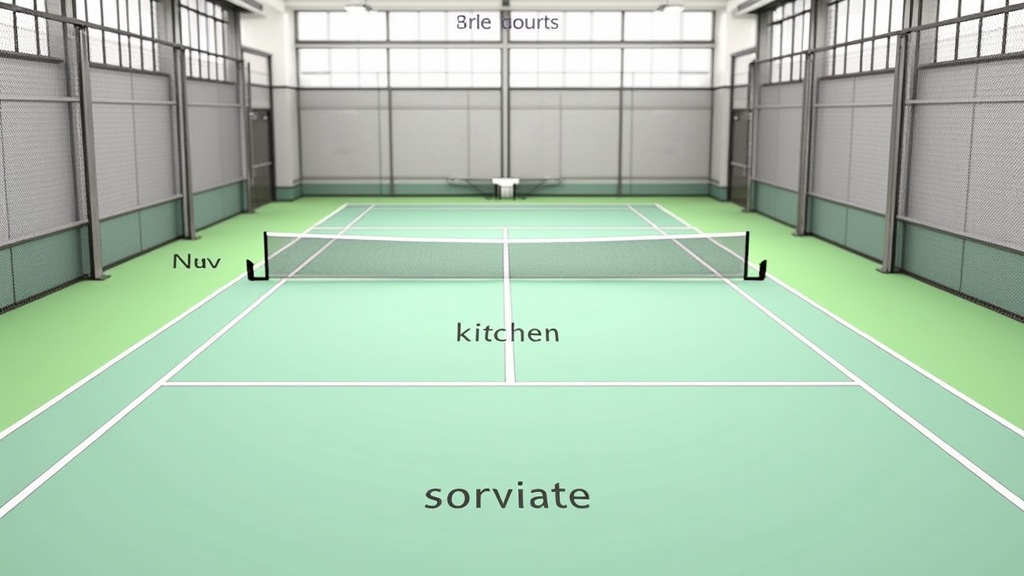
- Court Size: A pickleball court is 13.41m long by 6.10m wide (44ft x 20ft). That’s about the same size as a badminton court and gives plenty of space for all skill levels.
- Net Height: The net sits at 86.4cm (34 inches) in the middle and 91.4cm (36 inches) at the sides to allow for easy clearance and dynamic play.
- No Volley Zone (Kitchen): There’s a 2.13m (7ft) area on each side of the net called the “kitchen,” where players aren’t allowed to hit any volley shots.
- Service Courts: Each side of the court is split into left and right service courts by a centre line, clearly marked for accurate play.
Equipment You’ll Need
- Paddle: Pickleball paddles are usually made out of composite or wood. They’re smaller than tennis racquets but bigger than table tennis paddles, making them easy for all ages to manoeuvre.
- Ball: The ball is plastic with holes, slightly larger than a tennis ball but much lighter. Outdoors, you’ll use a ball with smaller holes to deal with the wind. Indoors, the holes are bigger for a slower bounce.
- Clothing: Comfy trainers and athletic clothes—basically anything you’d wear for badminton or tennis.
Some local venues offer paddles and balls for free or hire, so check before turning up empty handed. If you get hooked, your own paddle is a worthwhile buy. You can read more about gear specs in the official Pickleball England Equipment Rules.
Basic Rules of Pickleball UK
Pickleball moves at a chill pace, but the rules keep games clear and competitive. Here’s what you need to know to play by UK standards whether you’re at a club, a school gym, or a leisure centre.
Serving Rules
- Serves are always made underhand, and paddle contact with the ball must be below waist height for a fair start.
- The server stands behind the baseline and hits the ball diagonally across the court into the opponent’s service box. Foot faults—stepping on or past the baseline—void the serve.
- Only one serve attempt is allowed per rally, unless there’s a let (where the ball touches the net but still lands in the correct service court), in which case you retake the serve (USA Rules allow for play to continue if there is a let but the ball bounces in the correct service court)
- In doubles, each player on a team gets turns to serve, except for the first serve of each game. Only one player serves to kick things off for each team.
Scoring Basics
- Only the serving side can score points, making each serve a fresh opportunity.
- Games are usually played to 11 points. Win by at least two points to take the game. Tournament matches might be played to 15 or 21.
- Switch sides after each odd game when playing a match series. If you’re playing outdoors and the sun is a factor, switching keeps things fair.
Double Bounce Rule
The double bounce rule in the UK (and globally) means that after the serve, the receiving team must let the ball bounce once before returning, and then the serving team must let it bounce before making their next shot. After these first two shots, you can volley or play off the bounce as you like for the rest of the rally.
No Volley Zone (Kitchen) Rule
- Players can’t hit volley shots (hitting the ball in the air) while standing in the kitchen or touching the kitchen line. Both feet need to be clear of this area for a valid volley.
- It’s totally fine to step into the kitchen to play a ball that bounces first, and many points are won with a well-placed soft shot here.
This part of the court causes loads of funny moments and a few debates for newcomers, so take an extra minute to get comfortable with it. Check out some detailed guides on mastering kitchen play at Pickleball England.
Fouls and Faults in Pickleball
Most points in pickleball end with a fault, so knowing what counts as a fault really helps your learning curve. The main situations when play stops and the serve switches over include:
- Missing the ball entirely when you swing—easy to do in the heat of the moment!
- Serving into the net or outside the boundary lines.
- Stepping into the kitchen and volleying the ball without a bounce. Beginners tend to get caught by this one a lot.
- Volleying the return of serve or the serve itself before it bounces. This breaks the double bounce rule.
- Touching the net or post with your paddle, body, or clothing, even by accident.
- Double hits—when the ball strikes the paddle twice—or carrying the ball instead of a clean shot.
- Playing out of sequence, especially during doubles. Best to have a quick chat with your partner before play starts to avoid confusion.
I’ve found most players pick up the main faults quickly, but the kitchen rule and double bounce catch out first timers most often. Practice helps you spot what counts as a legal shot and helps fine-tune your footwork.
Singles vs Doubles: Key Rule Differences
You can play pickleball in the UK as singles or doubles, and while the game overall is the same, the serving order and court coverage mix things up.
Doubles Rules
- Both players on each team get to serve before the serve rotates to the other side (except for the first game serve).
- Partners pick sides at the start, then swap sides with each point won while their team is serving. Communication is key.
Singles Rules
- The server always serves from the right side when the score is even and the left when odd—easy way to remember whose turn it is.
- All the court coverage is on your shoulders, so get ready to move!
For new players, doubles is fantastic—it’s more social and less demanding since you each cover half a court, making it easier to learn positioning. Singles steps things up with extra movement and lets you test your shot variety in a fast paced game.
Pickleball Etiquette and UK Playing Culture
UK pickleball clubs have a relaxed, welcoming vibe. There are a few unspoken rules all regulars follow, keeping games fun and the atmosphere friendly:
- Call out the score loud and clear before each serve. It stops confusion and helps everyone keep track.
- Be honest with line calls, even if it costs you the point. It keeps the game respectful and fun for all.
- Apologise if you accidentally hit someone—it happens to the best of us and a quick “sorry!” always gets a smile.
- Rotate off the court quickly during club sessions so others have a chance to play. Share the love!
- Welcome new players with a few friendly tips. Some of my best friends today are folks I met on the pickleball court thanks to this kind attitude.
If you’re unsure on the rules or want clarity, just ask. Most players are happy to explain and often swap stories about close calls or share advice—it’s all part of the fun.
Common Pickleball UK FAQs
What is the minimum age for pickleball in the UK?
There’s no set age limit—kids from 6 upwards and adults well into their 80s play. Most clubs are all-inclusive, but check with your local venue for age-based open sessions.
Can you play pickleball outdoors year-round?
The UK weather isn’t always kind, especially in winter. Still, determined players keep games going, even through rain and chilly conditions, with the right trainers and a positive mindset. During the rainy months, many clubs move games into community centres or sports halls.
Do I need to be a club member to play?
Lots of parks now offer public courts, often bookable for free or at a small cost. Clubs usually have pay-and-play sessions, which are perfect for trying the sport before becoming a regular member.
Is pickleball good for keeping active and making friends?
Absolutely! Pickleball is great for a friendly workout, improving coordination, and meeting people of all backgrounds. Social events at clubs and tournaments also keep things lively and engaging.
Your Next Steps in Pickleball UK
Learning the UK pickleball rules lets you get more out of every session. You’ll play fair, avoid beginner mistakes, and make games more enjoyable for everyone involved. Mastering the details—like the kitchen, serving, scoring, and double bounce—builds your confidence and skillset for matches and casual games alike.
Quick Action Plan:
- Try a club taster session or open play to get a sense of the rules in practice with locals.
- Practice serving underhand and calling the score at home, or grab a friend for a practice rally in the park.
- Browse or download the full UK rules from Pickleball England if you want to really check out the details.
Have you tried pickleball in your local area yet? Got a burning question or your own top tip for new players? Share it in the comments below and keep the pickleball adventure rolling!